The dog days of summer is a phrase that dates back to the ancient astronomy of Greece, Egypt, and Rome. The star Sirius was considered the watchdog that coincided with the Nile River's annual flooding, long before the construction of the Aswan High Dam. Hellenistic astrology linked the star's appearance to bad luck, drought, sudden thunderstorms, lethargy, sickness, and mad dogs. The star's rising and setting with the sun in midsummer contributed to the oppressive heat and severe weather. My mother, not unlike the ancient astrologers, looked upon this period of time with a distrustful eye. If my mother ever knew about Sirius, the Dog Star constellation, she never let on to me. Leary of the dog days and what they represented, my mother prepared for the worst. She warned me against pestering the dog. According to her, even a kind dog could potentially turn mean on a sticky, hot day. So, naturally, I associated the phrase "dog days" with mad dogs.
The name Sirius derives from the Ancient Greek seirios, meaning "scorching." Sirius, the Dog Star, makes up the nose of this dog-shaped star constellation. The dog's nose is the bright star that appears just before the sun rises in the east, marking the beginning of the year's hottest days. From Earth, it is the sky's brightest star. The Farmer’s Almanac notes that the dog days last for 40 days, from July 3 through August 11. Man and beast have little ambition and prefer not to be bothered during these days of heat and humidity. Nights are generally hot and sticky and not at all good for sleeping. Taking leisure time, taking a vacation, reading a good book, and staying cool in an air-conditioned living and working space are modern-day luxuries that are often easily taken for granted. I remember a time when life was much different. Growing up on a hill farm, we lived as hill folk. In the ‘60s, advances in society and in farming practices had somehow moved beyond our isolated farm, leaving us behind the times. Though the work was hard, the days were long, and money was tight, life's simple pleasures were received with gratitude and wonder.
Haying consumed most of the summer at the farm. Acreage that would take a man all summer to hay in yesteryears takes a few short days in today's world of farming. On top of the time and labor involved in putting up hay, getting a stretch of good hay-producing weather was a challenge. Thunderstorms erupt from clear blue skies with little warning during this time. Even today, with labor-saving machinery, putting up quality square bales is a rain-dodging dance, and a gambling bet a farmer makes with the weather. Sometimes winning and often losing.
My father didn't have much outside help with haying, aside from my mother. He only cut what he could bring into the barn at one time, which wasn't more than a couple of hundred bales at the most. My mother tried her best to help by gathering the bales into small piles, making the pickup process a little easier with fewer steps and fewer stops for the wagon. The bales were too heavy for me to lift, so I did my part by rolling them. Some sections of the fields were steep, and the force of the baler spitting out the bales sent them rolling down the hill until they reached the bottom, or another bale stopped them. It didn’t take me long to realize that I performed my best work rolling bales with the help of a downhill slope. Looking back now, it was a good introduction to the law of physics.
I don't know how my father did it all. He took great pride in putting up hay and routinely cared for his equipment, sharpening the cutter-bar knives by hand after each mowing and greasing all the moving parts. Not a spear of grass was wasted in those days. A sickle bar mower trimmed the ledgy outcroppings on our hill farm. An old-time cutter bar that extended eight feet beyond the right side of the tractor makes it easier to trim along tree lines and in hard-to-reach areas. When a field of hay was dry, it was raked, baled and picked up. The next day any loose hay was raked and baled. The loose hay was called scatterings which amounted to another ten to 15 bales of hay that otherwise would have been wasted. My father used a dump rake for this job, originally horse-drawn but later redesigned to be pulled by a tractor. I liked climbing up and sitting on the seat when it was parked in the field and imagining being pulled around the hayfield by a powerful workhorse. My mother worked by hand during this time, using a wooden bull rack to move loose hay from the ledges where the dump rack could access it. Some places grew hay where even the tractor and sickle mower couldn't negotiate. The hand scythe was perfect for these areas. My father enjoyed hand mowing with a scythe, and he made it look rhythmic and effortless. He sharpened the blade before every use and sometimes even during the job.
We milked fewer cows during the summer. The milk market saw higher demand in the fall and winter months due to increased usage. A higher premium on fall milk meant a good portion of the herd calved in the fall and winter months. Thunderstorms and the evening milking coincide. Milking was shut down when a bad storm came ripping through. My mother didn't like thunderstorms. When a storm came up at night, her mother would wake all nine children and they would sit together until it passed.
My father, on the other hand, loved watching a good storm with roaring claps of thunder and bolts of lightning dancing across the sky. The front porch of our farmhouse was the perfect spot for an up-close view of the whole show. We lived high on a hill with a panoramic view to the east. Even though a roof sheltered the porch, the spray from a downpour brought welcome coolness to the skin. Sometimes I sat on the front porch with my father, but I must say, the sheer intensity of some storms intimidated me, and I'd find myself inside, sitting with my mother on the couch for safety.
Back at the barn, milking during the heat of the summer wasn't all that much fun. The cows were hot, and heat radiated from their bodies as they stood in line inside the barn. Flies were drawn to the cow, making her uneasy and increasing the likelihood of kicking the milking machine off onto the stable floor. My father wasn't in a good mood after a hot day of haying and would be short on patience. If it looked like a stretch of good haying weather, my father mowed evenings after milking. Before going to bed, he relaxed by sitting on the porch. Sitting in silence, we watched the fireflies dance and the faraway flashes of heat lightning. Just before retiring to bed, on a clear night, we'd step off the porch and look up at the evening sky and locate the big and little dipper. He showed me how to find the North Star and told me I could always orient myself by its position, even in the dark of night. We talked about the vastness of the Milky Way and the distant truths and mysteries it holds. Life was hard living on a hill farm, but the simple rewards and precious moments were grand.
My mother made a big pitcher of lemonade with freshly squeezed lemons, a little sugar, and water. She added the lemon rinds to the pitcher for added flavor. What a welcome treat on a hot day. We'd walk to the hay field with a big glass for my father. Shutting down the tractor, he would take a needed break, enjoying a thirst-quenching glass of homemade lemonade and conversation.
Another summer treat was homemade root beer. During the hottest days of summer, my mother made and bottled her own. I distinctly remember the spicy, earthy scent of sassafras extract. I used a big spoon to mash the extract into the sugar in a large enameled tub. We didn't buy soda from the store, so the fermenting and bottling of this seasonal drink was nothing short of a celebration. Waiting until it was bubbly and ready to drink was the hardest part: Ahhh, the flavors of summer and youth. Fermented drinks are popular these days, and homemade root beer is no exception. Most recipes call for brewer's yeast, but some people successfully use ginger bugs and even kombucha mothers to inoculate and ferment their brews. I found several instant-gratification recipes that use dry ice, thereby eliminating the fermenting process. Dry ice, a solid form of carbon dioxide, melts into the liquid ingredients, releasing carbon dioxide gas that creates bubbles and carbonates the drink. One recipe yields a root beer concentrate to be added to seltzer water. I found an overwhelming array of root beer flavorings.
If today's commercial root beer doesn't taste the way it used to for those of us old enough to notice the difference, one reason is that a primary flavoring has been eliminated. According to Jessica Delfino's article “The Root in Root Beer” on allrecipes.com, the FDA banned the commercial use of sassafras root in 1976. Studies conducted in the 1960s found that the root's chemical compound, safrole, causes cancer in rats. According to some interpretations, rats were given the equivalent of 32 bottles of root beer a day. The root was removed from the beer and replaced by other flavors. Safrole is also found in anise, cinnamon, nutmeg, and black pepper. Although sassafras is banned for commercial use, many homebrewers still use it for the authentic, traditional root beer flavor. Extracts are available for those who don't want to source multiple ingredients. Keep in mind that some companies use proprietary ingredient blends not listed. McCormick root beer extract includes water, artificial coloring, corn syrup, sulfites, and preservatives. Before the ban on sassafras, it was used to flavor toothpaste and to scent soap. It has been used medically throughout time to help relieve infections, bronchitis, and similar health conditions. Sassafras oil was used topically to soothe arthritis and bug bites.
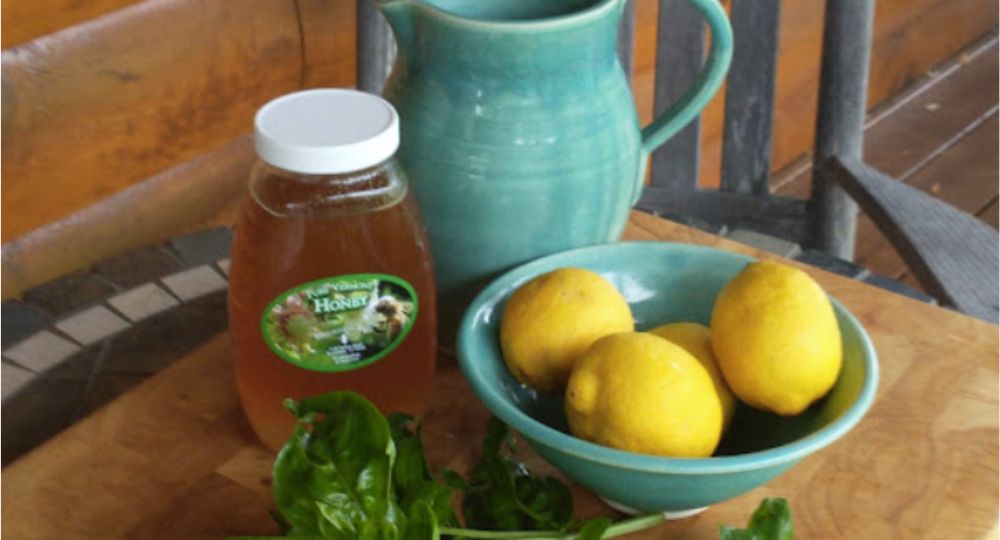
The nostalgic part of me imagines sipping a cold A&W root beer on a hot day during the dog days of summer. The reality is that my tastes have changed over the years. Even if root beer tasted as it did before sassafras was removed, the sweet soda flavor would likely be unappealing to me. On these hot days, I dine outside with a homemade pitcher of lemonade sweetened with honey and garnished with fresh ginger root and basil, while the orzo salad takes in all the flavors of dog days.