Journal Entry—September 24: Reflecting on the year, I can confidently say it has been a fruitful one for my gardening endeavors. This morning, a light touch of frost hinted that it's time to harvest the winter squash, and I am eager to savor their vibrant colors and rich flavors. The red pepper jam has set beautifully overnight with the salt, ready for processing today. Digging up the potatoes is also on my agenda. I’m hoping the sweet potatoes can remain in the ground a little longer to maximize their growth before the impending frost. The cold-hardy lettuce and chard should keep providing fresh greens for a few more weeks, while the Brussels sprouts patiently await the frosts that will enhance their natural sweetness. As the season transitions, I can’t help but feel a profound sense of fulfillment in reflecting on the bounty and beauty that this gardening year has offered.
Journal Entry—April 27: Today, as I prepared the ground for planting with my broadfork, I took the opportunity to gather a lovely crop of dandelion greens for dinner. I'll simmer them in water, adding a tablespoon of olive oil and salt. I wish I still had some salt pork to complement the dish; I'll have to make do with olive oil instead. A splash of vinegar and a touch of horseradish will transform these greens into the spring tonic our bodies crave.
Reflection: The day after preparing the ground, I planted my pea seeds after soaking them overnight for optimal germination. I also planted carrots, and this year, I splurged a bit on pelleted carrot seeds. The extra cost has proven worthwhile, making the planting process much more enjoyable. On the other hand, sowing the tiny Claytonia lettuce seeds wasn’t as pleasant. I made the mistake of mixing my spinach seeds with radish seeds. A bad idea; the radishes overshadowed the spinach and complicated the harvest.
Journal Entry—May 2: Effective weed management goes beyond the garden; it encompasses the entire living ecosystem we are responsible for nurturing. Yesterday's task involved putting up sheep fencing and watching for invasive growth along the perimeter. We pulled out Japanese Barberry with its intensely yellow roots filled with berberine—a compound known for its potential to help regulate blood sugar, support heart health, and aid in weight management. It seems that Barberry has its uses after all. We also tackled some multiflora roses that had taken root, digging it out with a shovel. What an accomplishment of sheer spite. I started removing a patch of garlic mustard from a steep bank that borders the road but couldn’t finish it all; I'll need to return soon before it flowers. The sheep enjoy chervil but turn their noses up at garlic mustard. My back is reminding me of yesterday's work this morning. More fencing awaits today in a short stretch from the garden to the barn. Once the fence is complete, I’ll launch an all-out war on the garlic mustard. Once I get moving, my aging body will loosen up.
Summer Reflections: By the first week of July, it’s time for the second thinning of the carrots. The thinnings are substantial enough to prepare a batch of whole roasted carrots, perfect for celebrating Independence Day. This year’s pelleted seeds have made the thinning process a breeze. I prefer to thin carrots in two stages; the first thinning occurs when the seedlings are just a couple of inches tall, spacing them about a half inch to one inch apart. Depending on the soil conditions, I either carefully pull the unwanted seedlings or snip the tops close to the ground. Thinning is crucial for developing long, straight taproots. I’ll aim for a spacing of at least two to three inches.
By late July, the cabin is filled with garlic hanging in leafy bunches from a clothesline on our shady front porch, curing gracefully in the warm summer air and perfuming the atmosphere. Garlic isn't just on my breath; it’s become a defining part of our late-summer landscape—no evil spirits will dare cross our threshold! After six weeks of curing, I carefully remove each plant from the line, starting with the hardnecks. I trim the roots and cut the stiff stalks about an inch and a half above the bulb using bypass clippers for efficiency.
This process reminds me of a friend's experience at the Tunbridge Fair. She had entered her stunning hardneck garlic but inadvertently left four inches of neck above the bulb, resulting in disqualification. Hardnecks store well in the pantry, but I tend to use them before softnecks because they have a shorter shelf life. Softnecks, in contrast, lend themselves beautifully to braiding, making for a lovely kitchen display. I generally braid mine after they’ve finished curing on the clothesline, but next year I might experiment with braiding the whole plant first, before the leaves dry.
Growing garlic is relatively easy, but it’s not as straightforward as it once was, especially with new challenges like the leek moth. Arriving from Canada around 2020, this pest lays eggs directly in the center leaves of garlic, leeks, and onions. I’ve observed the tiny caterpillars, encased in protective spittle, emerge and begin feasting on the leaves. However, between growth and harvest, they burrow down, damaging the bulbs and impacting their size and storage potential. The leek moth has multiple generations each year, making vigilance essential. Hand removal, spraying with Bacillus thuringiensis (Bt), or covering plants with micro mesh can help mitigate this challenge.
Each year, I plant both hardnecks and softnecks. Growing a crop of garlic takes about nine months. I’ll be planting next year's crop in late October for a late July 2027 harvest. Choose a site that gets full sun, though a bit of partial shade can also work. Proper bed preparation is key; garlic thrives in well-drained, rich loam soil supplemented with ample organic matter. I loosen the soil with my broadfork and incorporate generous amounts of compost. Choosing your biggest, best bulbs for replanting matters. Each clove will yield a new bulb. Plant each clove with the root end down and the pointed end up, two inches deep and about six inches apart. Topping the bed with four to six inches of straw or dried grass clippings mixed with leaves helps retain moisture. In four to eight weeks, depending on the weather, small shoots may begin to emerge through the mulch. Growth will pause during the winter, but in the spring they will be the first green of the season, adding joy to an otherwise fallow garden landscape.
You'll find hundreds of cultivated garlic varieties to choose from that you will not find at supermarkets, which only carry a generic softneck variety. Choosing garlic varieties can be fun, as Brookfield Bees Farm highlights: visitors with an adventurous palate can taste the difference, compare the subtle nuances of the different garlic varieties they grow, and wash it all down with freshly squeezed cider. Their Cider Open House will take place on Kibbee Road in Brookfield on October 10 and 11, 2026.
Fall Reflections: This year has been a surprisingly successful one for onions. A gardening friend from Hartford raved about a variety called Cortland, so I decided to try it, and I’m glad I did! The bulbs are big, firm, and uniform, with a sweet and mild flavor that I love. They’re reputed to have an outstanding shelf life of up to nine months, and sourcing the seeds wasn’t difficult. I harvested my crop in early September and braided the tops before hanging them up to cure. A few onions can weigh quite a bit! It’s a shame my husband doesn’t share my enthusiasm for onions. He truly doesn’t know what he’s missing.
Over the past couple of years, I’ve experimented with extending my growing season through successive seeding. Last year, I was just a bit too late with my second planting of string beans, but this year, I got it right. Instead of waiting until the end of July, I planted them on July 6 and chose the Wyatt variety. They produce abundantly, freeze well, and remain deliciously string-free even when they’re overmature. I followed that with another zucchini planting on July 19, which is now yielding a lovely harvest in mid-September. I’ve also been seeding lettuce every three weeks; given the recent lettuce scare, it’s comforting to have a steady supply growing in the garden.
Some of my early spring lettuce has grown beautifully, flowering and going to seed. The plants now tower over three feet, resembling elegantly-shaped Christmas trees. Since I don’t till my garden, I’ll be rewarded with super-early volunteer lettuce next spring, which I can transplant as needed or let grow where it germinates. This year, I also made room for wild perennial spinach, which I had been wanting to try; I planted it alongside Swiss chard on July 19, and the germination has been great, with a first harvest in mid-September. The perennial spinach resembles lamb’s quarters, a weed I’m pleased to see thriving in the garden. Some folks call it wild spinach, and it’s absolutely delicious. It’s amazing how many common garden “weeds” are actually nutritious, edible treasures.
I revisited the old heirloom potato variety known as Green Mountain, first developed in Colchester in 1878. My parents used to grow acres of them to supplement our hill farm in Northfield until the early 1960s. It’s been quite a while since I have grown this variety, mainly because it's been hard to find seed potatoes. They have a dry, mealy texture and are fantastic when baked, mashed, or fried. While Russets have become the market favorite for their uniformity, I finally found some Green Mountain seed potatoes at Fedco and placed my order. Lately, I’ve been boiling them in well-salted water, draining, then adding a generous splash of olive oil mixed with a handful of chopped herbs, especially basil—simple and absolutely delightful.
I also like to grow a block of corn to ensure it’s as fresh as possible. Nothing beats boiling water for corn while harvesting it—talk about fresh! I did run into germination issues with my favorite variety, Delectable. Lynn and John Lipkvich at Spruce Lane Farm introduced us a few years ago, and I've been hooked ever since. Unfortunately, I waited a bit too long to replant after some seeds didn’t germinate, so I filled in the gaps with leftover seeds from last year. The growth ended up uneven, but eventually, everything caught up, creating a uniform crop.
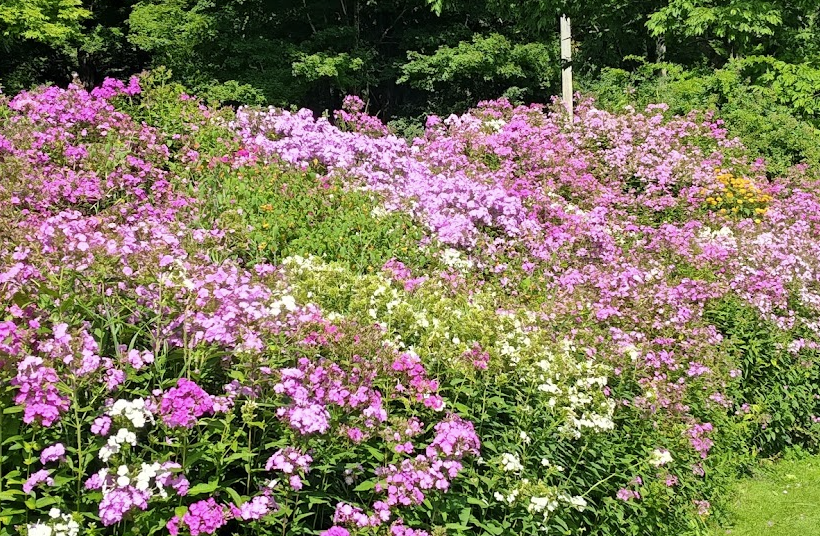
A Success Story: In early August, Skip Buck called me, excited, and invited me to see something special at his homestead on West Street in Brookfield. I arrived on the morning of August 5, and there he was, out beyond his garden splitting wood. What I found was a breathtaking display of garden phlox in vivid purples, pinks, and whites covering the bank above his garden. Even more astounding, this area was once overrun with chervil.
The transformation is rooted in romance. Skip shared that when he and Elaine were dating, he'd dig a clump of phlox from her flower garden in East Montpelier to replant on the Brookfield bank. With repeated plantings over two years, the phlox spread aggressively and ultimately outcompeted the chervil. In the fall, he prunes the phlox back with a chainsaw, which surprised me. I asked, “You’re kidding, right?” But Skip laughed and explained that a weed whacker doesn’t cut it, and the phlox’s stiff stems are no match for a scythe. “I enjoy using my scythe, but the chainsaw seems to be the more effective tool here.”
After trimming back the phlox, Skip uses a pitchfork and rake to gather the debris into his tractor's bucket, then takes it to the burn pile. In spring, the phlox starts green and healthy, and he diligently removes any chervil he spots, reporting that there are far fewer these days. He attributes this success to the bank's rich soil—once the dumping ground for horse manure. Skip wisely advises that transforming a garden takes time and persistence: “You have to plant a few plugs here and there and stay vigilant against invasives like chervil. In time, the desired plants will take over.”
Skip and Elaine are committed gardeners and even experimented with planting fennel this year, which has sparked my interest for next season. When I asked about their year, Skip noted they had a slow start with beans and needed three plantings before they succeeded. They also faced challenges with zucchini germination, mirroring my own experience.
Interestingly, Skip hasn’t seen any tomato hornworms. Not yet, anyway. In fact, this year has been relatively mild compared to the past, with only one hornworm spotted on my garden tomatoes. On the deck, my husband has removed about five from our one potted cherry tomato. Remarkably, Skip hasn't seen a Colorado potato bug in four years, while I’ve been pest-free for two. However, Dan Childs has had a particularly rough year with potato bugs. Gardening is a biodiverse adventure that brings together communities for both nature and humanity, with the capacity to create change and heal the world.